Newton’s Second Law Simulation — Description
The six phases (looping)
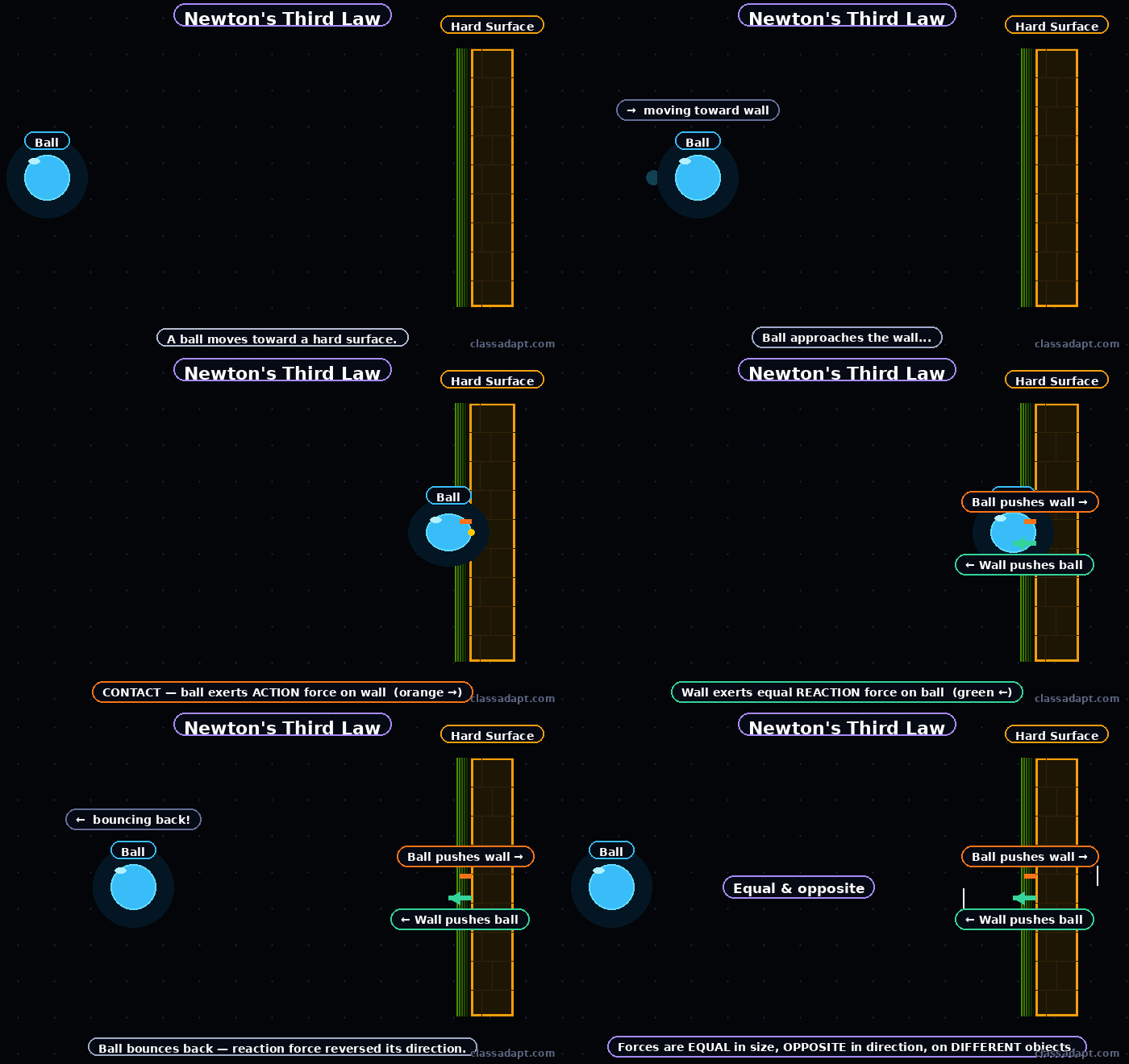
1. Title / Opening The cyan ball sits stationary on the left side of the canvas. The wall (amber brick rectangle with a faint orange glow on its contact face) stands on the right. Caption: “A ball moves toward a hard surface.”
2. Approach The ball accelerates rightward with an ease-in motion — it starts slow and speeds up. A velocity arrow appears above the ball pointing right, labelled “→ moving toward wall.” A short motion trail fades behind it.
3. Impact — Action force The ball reaches the wall and squishes horizontally (it flattens slightly on contact). The wall squishes very slightly in the opposite direction. A bright white flash bursts at the contact point. An orange arrow grows rightward from the ball’s surface toward the wall, labelled “Ball pushes wall →”. Caption: “CONTACT — ball exerts ACTION force on wall (orange →)”
4. Reaction force The ball remains squished at the wall. A green arrow grows leftward from the wall face back toward the ball, labelled “← Wall pushes ball”. The two arrows are at slightly different heights so they never overlap. Caption: “Wall exerts equal REACTION force on ball (green ←)”
5. Rebound The ball springs back leftward, ease-out — fast at first then settling. The velocity arrow reappears above it pointing left, labelled “← bouncing back!” Both force arrows remain visible briefly before fading.
6. Hold — Full labelled frame The ball has returned to its starting position. Both arrows are shown at full equal length. Vertical white tick marks appear at both arrow tips to highlight they are the same length. A purple badge reads “Equal & opposite”. Caption: “Forces are EQUAL in size, OPPOSITE in direction, on DIFFERENT objects.”
Key visual teaching points
- The orange and green arrows are the same length — equal force magnitude
- They point in opposite directions — one right, one left
- They act at the same contact point but on different objects (one on the wall, one on the ball)
- The ball bounces back because of the reaction force — the wall didn’t just stop it, it pushed it